0 m
Sunlight Zone
Where the ocean still looks like the ocean. Photosynthesis, warmth, and the last depth a free diver will ever see.
100% surface light0 · Surface — begin descent
Crewed submersibles and expeditions rated to the floor of the Mariana Trench — 10,935 metres, and back.
The company
Most of the planet is deep, dark, and cold. We build the craft that go there — and bring their crews back.
Ninety-five per cent of the ocean has never been seen by human eyes. The pressure at the bottom of the Mariana Trench would crush a nuclear submarine like a drink can — and yet, in a titanium sphere the size of a small car, two people can sit at the deepest point on Earth and look out of a window.
Hadal designs, certifies, and operates crewed submersibles for science, exploration, and record-setting descent. Every craft we fly is rated by a marine classification society, and every dive we log has ended with the crew back on deck.
The descent
The ocean is not one place. It is a stack of worlds, each colder and darker than the last. The bar beside each zone is how much of the surface's light survives to that depth.
Where the ocean still looks like the ocean. Photosynthesis, warmth, and the last depth a free diver will ever see.
100% surface lightColour drains to blue, then to nothing. The first animals that make their own light live here — and so does most of the ocean's fish, by weight.
22% surface lightNo sunlight reaches this far, ever. Pressure passes 100 atmospheres. Everything that glows, glows on purpose.
3% surface lightA near-freezing plain that covers more of the planet than every continent combined, and that almost no one has seen.
1% surface lightThe trenches. Named for Hades. The deepest six per cent of the ocean, reachable by a handful of craft on Earth — ours among them.
1% surface lightThe fleet
From a crystal acrylic sphere for the twilight zone to a forged-titanium craft rated for the trench floor — each is built for a different slice of the deep.
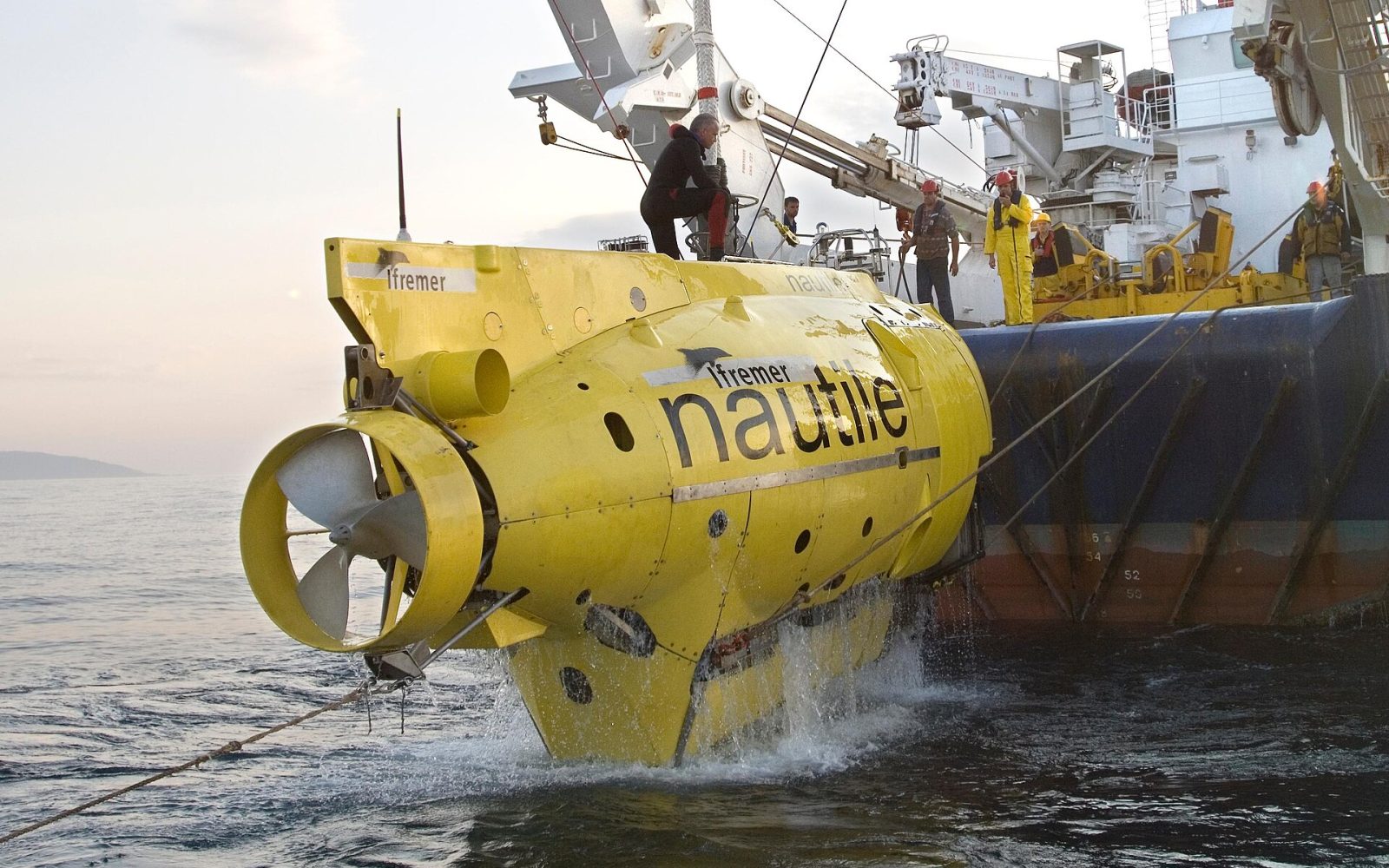
The flagship: a two-person titanium sphere certified to the floor of any trench on the planet, and the only craft in the fleet rated for repeat full-ocean-depth dives.
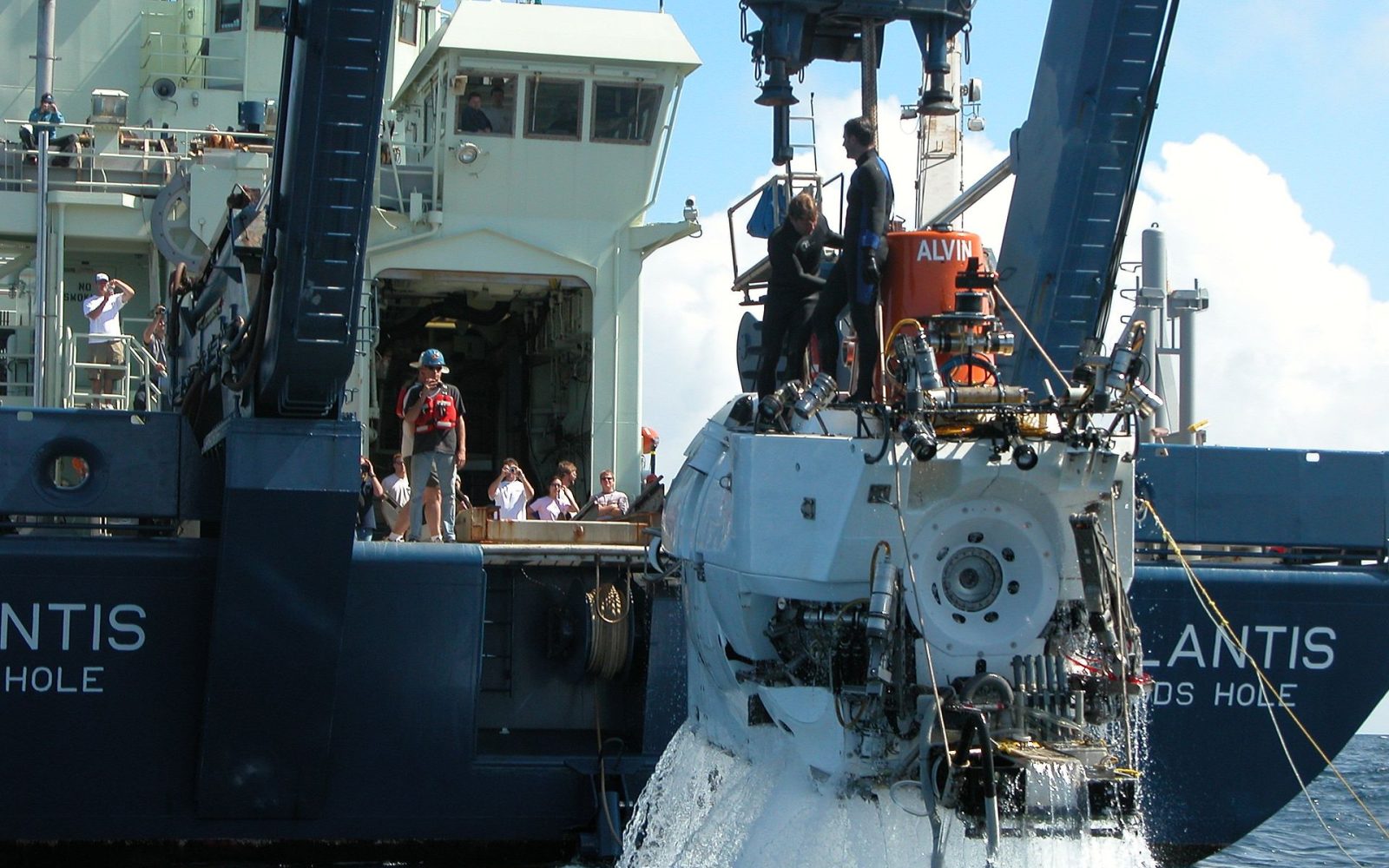
SpecificationsA three-seat science platform for the abyssal plain — twin seven-function manipulators, a sampling basket, and enough dome glass to put three scientists nose-to-nose with the seafloor.
SpecificationsA crystal acrylic hemisphere that puts a guest and pilot inside a 300-degree window — the craft that takes explorers, not only scientists, past the twilight zone.
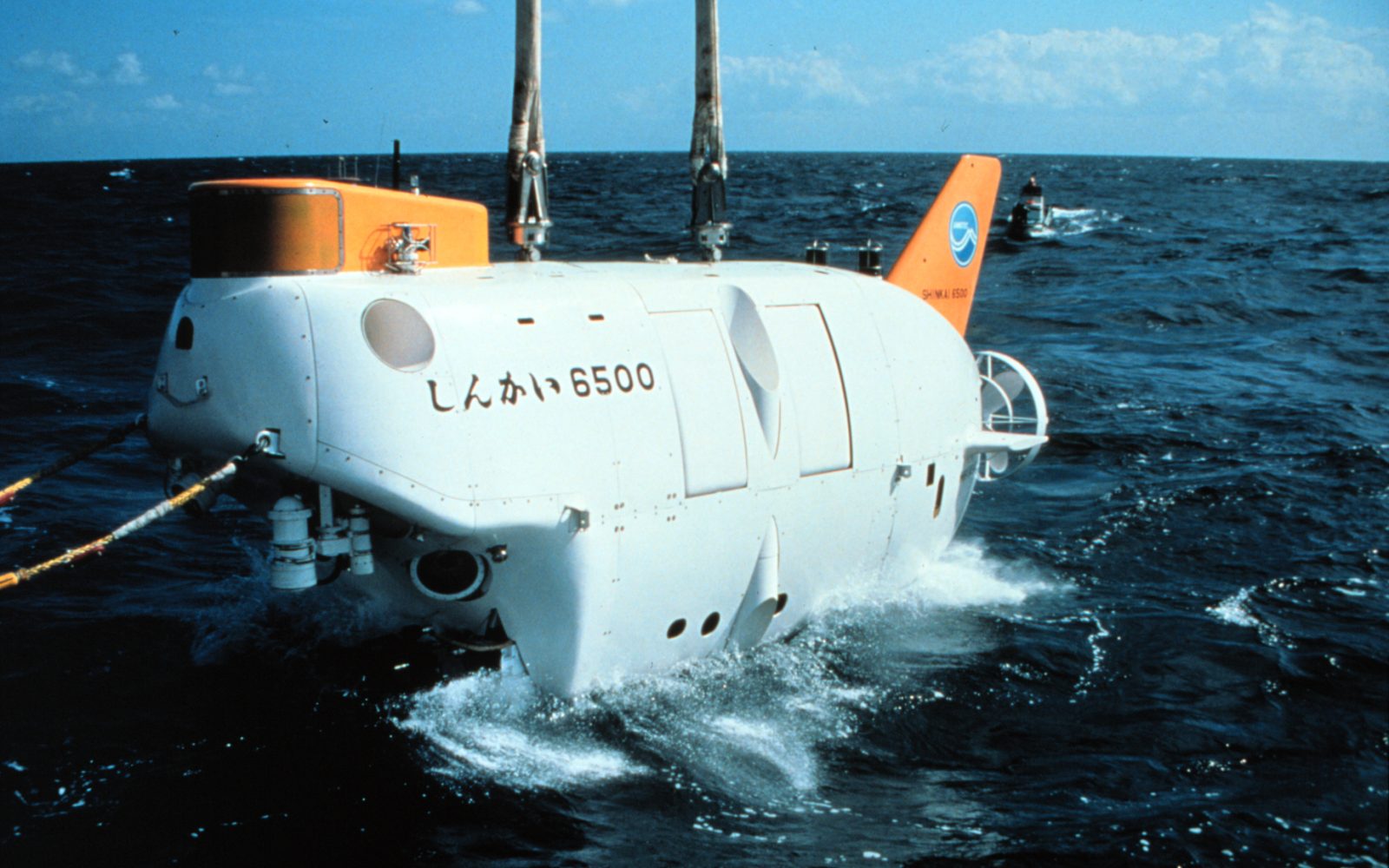
SpecificationsA long-endurance survey submersible for hydrothermal vents and cold seeps — twelve hours of bottom time, cameras on every axis, and a manipulator built for heat.
SpecificationsEngineering
A crewed submersible is a survival capsule wrapped in expendable machinery. The people ride inside a single forged-titanium sphere — the one part that must never fail. Around it hangs everything that can be flooded, crushed, or dropped: buoyancy foam, oil-filled thrusters, ballast, and battery.
Dive log
Meridian Deep held station over an active black smoker for eleven hours, sampling vent fluid and filming a field of tubeworms two metres tall.
A twin-dive day: Hadal One reached the second-deepest point of the Mariana Trench and confirmed the depth by direct pressure gauge.
Hadal One completed its fourth dive to the deepest point in the ocean, recovering three sediment cores and a new amphipod species for the Institute.
Charter
Science campaigns, film production, and record descent. Tell us the objective and the depth — our dive team designs the rest.